API quota exceeded. You can make 500 requests per day.
@emilianocolorbondfencinginstallerdifh701
Estimating product quantities for a Colorbond fence appears straightforward till you're on site with three things happening at the same time: a ground line that's not flawlessly right, an entrance that requires added framework, and a shipment vehicle driver asking where your local gain access to factor is. If you desire a job to run smoothly and maintain your expenses sincere, your take off requirements to be greater than "count the blog posts and include some rails."
This guide is developed around just how fence building contractors and Colorbond fencing contractors commonly think through quantities, waste, and real world variations. It will assist you estimate materials for a Colorbond fence, whether you're preparing a do it yourself develop or preparing a quote as a Colorbond fencing company or installer.
Start with the fencing layout, not the materials
The first blunder people make is computing amounts from an approximation of the size. Genuine jobs hardly ever match the "eyeballed" measurement.
Before you estimate anything, lock down these inputs:
- Total fencing length along the limit, measured at ground level and again along the straight line if the line is not straight.
- Post spacing strategy (generally 2.4 m or 2.0 m depending upon layout and panel system, plus height and wind exposure factors to consider).
- Fence elevation and panel type (most Colorbond fence systems use specific rail and article configurations, so amounts must match the chosen system).
- Any interruptions: gateways, returns, corners, and modifications in direction.
- Ground conditions: sloping ground, irregular areas, and whether you're doing standard articles or footing/reinforced options.
When I'm doing a price quote for Colorbond fencing installers or a building contractor doing several runs, I constantly deal with layout as the support. If the design is wrong, every amount downstream comes to be a guess.
Calculate messages properly (and prepare for the corners and ends)
Posts drive the majority of your product volume. The simplest approach is likewise the one that usually fails: "divide the size by the article spacing and assemble." That ignores end conditions and corners.
Here's the disciplined way:
- Determine the number of message settings you require along the length based upon your picked spacing.
- Add messages for every single end, edge, and change of direction.
- Adjust for entrances, because entrances are not simply "missing out on panels," they call for stronger framing and typically added blog posts on each side of the opening.
An excellent price quote begins by noting every message location: Message 1 at the beginning, then Message 2 at your spacing, and so forth, until you land at the end setting. If the limit size is not a tidy multiple of your spacing, you'll have 2 choices: adjust spacing a little throughout the run or keep small spacing and utilize a various number of bays. Most contractors choose the alternative that matches the system requirements and looks consistent on site.
Common message accountancy logic
Even when you're not doing an official timetable, utilize this logic:
- A straight run with N bays normally requires N + 1 posts.
- A gateway opening up removes several bays of typical infill, however eviction sides still need articles, and eviction hardware usually requires strong structure.
- Corners generally add articles beyond what a straight run estimation provides you, since you can not "share" a post in between two various fence instructions unless the system enables it and the style is built for it.
If you're pricing estimate a Colorbond fence company, this is where your credibility is either enhanced or shed. Clients don't see your calculations up until something is short. They notice right away when it's late.
Rails and mid rails: count bays, after that increase by rails per bay
Once posts are defined, rails become simpler. For most Colorbond fencing designs, each bay is mounted with rails between posts. Lots of systems utilize two rails for common heights, often three for higher fences or specific styles. Some styles are panel based where the sheet incorporates rails with a developed dealing with pattern, however you still require to make up the intended rail structure.
A practical approach:
- Count the number of bays, not simply the linear length.
- Multiply the number of bays by the rails per bay.
- Add added rails where the system asks for them around gateways, corners, and transitions.
Why bays matter
Using bays keeps you straightened with the message spacing plan. If you readjust spacing a little to fit an unpleasant length, you desire rails to reflect colorbond fence installer the real mounting rhythm, not a generic size based on metres.
In my experience, many "underquote" issues happen due to the fact that people estimate rails by multiplying fencing height or size as opposed to utilizing bay matters. Bed rails are where it harms monetarily, since you typically require specific lengths and waste is unavoidable.
Sheets/ panels: quote by bay insurance coverage and repairing overlap
Colorbond secure fencing can be supplied in various panel or sheet arrangements depending on the system and contractor choice. When estimating, choose early what you're utilizing:
- Full sheet panels mounted per bay
- Individual sheets reduced to size
- Pre-manufactured fence panels with an established number of rails
The amount technique relies on which one you're making use of. In many basic setups, you can treat each bay as one panel of dealt with width and after that readjust for the specific bay size if your blog post spacing is not perfectly uniform.
Two vital realities:
- If your post spacing is adjusted, panel widths may not match flawlessly without cutting or trimming.
- If your fence line includes close sections near boundaries, you might need partial panels on one end or around a return. Those partials still call for a sheet quantity based upon what you can cut from a typical sheet size or delivered panel size.
Waste and reducing allowance
If you're approximating from raw sheets, consist of a waste allowance. For straight runs with excellent measurement, waste can be small. For uneven sites, it can be higher. I usually treat reducing waste as a percentage variety rather than a single number, since website conditions decide it.
For example, if you're cutting around tiny offsets and you'll have returns, allow a noticeable barrier. If the site is tidy and straight, you can tighten it.
If you're collaborating with a Colorbond fencing service provider or a Colorbond fencing builder, ask what their regular waste allowance is for that certain system. It will certainly vary by whether they're using pre-cut panels, sheet cuts, or a mix.
Footings and concrete: price quote by posts, after that add the dull reality of access
Footings are not extravagant, but they are among the most convenient areas to miscalculate if you just believe in theory.
Footing quantity depends upon:
- Number of articles requiring footings (which is basically all line posts plus gate articles and edges)
- Footing diameter and depth
- Soil problem (acid rock, normal soil, needing deeper embedment, or requiring extra support)
- How promptly you can auger and exactly how your website gain access to impacts productivity
If your quote is for a Colorbond fence installer or fence professional, do not simply calculate volume. Think of how concrete in fact gets here and is poured. A good price quote includes a tiny barrier for spillage and rework, particularly when the dirt collapses somewhat in the red or you require to change levels.
Sloping ground adjustments everything
On sloping ground, you might make use of tipped footings, taller articles, or cut blog posts over ground and change the rail positions. Tipping impacts footing deepness per blog post, suggesting your concrete volume per article changes along the line. You might still deal with footing volume as "typical" for quoting, however you must sanity inspect the extremes.
If you have a high section, you wish to identify the "worst" articles and approximate their ground depth separately, after that utilize an average for the rest. This is how you avoid the dreadful situation where you've obtained sufficient concrete for most of the run and afterwards run brief on the worst incline section.
Brackets, correctings, equipment, and the tiny things that eats budgets
This is the group people disregard until they're staring at an empty cram in the center of assembly.
For Colorbond fencing, hardware consists of things like:
- Post caps (or the cap style needed by the system)
- Base plates, article inserts, or braces depending upon the blog post configuration
- Fixing screws or bolts, typically with certain lengths for the rail and sheet thickness
- Spacers, supporting elements, or anti-lift repairings if required
- Gate locks, hinges, and any kind of extra reinforcement plates
Estimating fixings is simplest when you understand the taking care of routine: the amount of fasteners per rail per panel, and the amount of per article. If you don't have that, you can estimate making use of common industry technique, however be careful. Different systems define various repairing patterns for wind performance and panel stability.
For pricing estimate precision, I advise mapping mendings to bays:
- Rails per bay times number of fix factors per rail
- Multiply by bays
- Then change for edges, entrances, and any type of unique areas where additional mendings are required
Gates: deal with openings as structural areas, not vacant space
An entrance is not a missing panel. It's a various design situation in practical terms. Even if eviction structure is pre-made, you'll need correct post sizing and positioning, plus reinforcement and hardware.
When estimating amounts for Colorbond fence jobs, do these checks:
- Gate width and type: single entrance, double gateway, moving versus hinged.
- Required number of hinge points and latch fittings.
- Gate post reinforcement demands (some designs ask for added bracing, specifically on sloping ground).
- Panel mounting around the gate opening, which may need added rails or unique connections.
This is where numerous "quick quotes" go wrong. People calculate the fencing length, deduct gateway size, after that assume the missing out on size suggests fewer materials. Yet you typically require added framework around the opening that offsets those savings.
The waste aspect: utilize judgment, not vibes
Waste is where price quotes become either realistic or fantasy. You desire enough allowance to cover the website's unpleasant sides without cushioning the work a lot that your quote becomes uncompetitive.
Here are the primary vehicle drivers of waste and remodel:
- Slight dimension mistakes, especially near boundaries.
- Panel cutting and end adjustments.
- Corrections after finding an article place needs moving for level reasons.
- Access concerns creating handling damage or replacement of a sheet.
If you're working as a Colorbond fencing company preparing quotes, maintain your waste allowance constant throughout similar projects so your pricing quote design stays precise. If you change the waste assumption randomly, you blow up of margins.
Step-by-step estimating technique you can reuse
If you want a repeatable approach, below's the operations I make use of when preparing take offs for Colorbond fence contractors and installments. It's detailed enough genuine estimating, without becoming spread sheet theatre.
- Measure and tape the fencing line length at ground degree, including any kind of jogs. Convert that right into a bay plan based on your post spacing.
- Determine message count for line, corner, and entrance locations. For straight runs, bays plus one obtains you began, then readjust for corners and openings.
- Calculate rails from bays and rails-per-bay, after that include the rail quantities required for entrances and any kind of special transitions.
- Estimate panels or sheet amount by bays, after that change for partial panels. Include a waste allocation for cutting and trimming.
- Calculate grounds and concrete quantity from message matter and footing measurements, after that adjust for sloping ground using worst-case posts.
That technique produces a solid beginning point. After that, you do a reality check versus site problems and system requirements.
A practical example: transforming a quote into numbers
Let's run a basic situation to demonstrate how the arithmetic acts. Think:
- Fence size along the limit: 24 m
- Post spacing: 2.4 m
- Fence elevation: common Colorbond fence height (think a system with 2 rails per bay for this example)
- No corners for simpleness, one straight run
Bays and posts
If your spacing is 2.4 m, then 24 m divided by 2.4 m offers 10 bays. A keep up 10 bays needs 11 posts.
So much:
- Posts: 11
Rails
Two rails per bay means:
- Rails: 10 bays x 2 rails = 20 rails
If the system makes use of particular rail lengths, you would certainly align rail matter with those sizes. If rails are supplied in common lengths and need to be cut, you after that consist of a trimming and waste allowance.
Panels
If each bay takes one panel:
- Panels: 10
If you have a partial bay area or any kind of cutting, panel matters come to be less tidy. You might need 10 full panels plus one extra sheet for a trimmed section, depending on exactly how panels are supplied and cut.
This is the crucial lesson: clean geometry gives clean numbers. A lot of genuine jobs include a minimum of one area that breaks the neat division.
Now add one gate.
If there's one 3 m entrance opening, the bay count usually transforms since eviction articles still exist, however the infill might be different. A typical technique is to re-plan the bay positions around the gate opening as opposed to just subtracting 3 m from the size. Or else you'll miscount panels and rails.
When I price estimate for a Colorbond fence builder, I constantly re-check bay settings after the gate is placed. Entrance placement transforms the structural rhythm of the fence.
System distinctions: why your "basic" take off might not transfer
Colorbond fence is not one global design. Different fence systems make use of various article kinds, rail plans, and dealing with timetables. A Colorbond fence company that has mounted one system for years could not match the approach another installer uses.
So your estimating approach need to reference the actual system:
- Does your vendor offer pre-drilled posts, brackets, and a taking care of kit with defined fastener counts?
- Are panels pre-cut to bay widths?
- Does the system need added rails at specific periods or for greater wind categories?
Without that info, you can still estimate generally, yet you take the chance of being wrong in the precise locations customers notice, like missing brackets or undercounting screws.
This is likewise why wise professionals quote "materials based upon system schedule" rather than "materials based on dimensions just." It shields both sides.
Common side cases that alter quantities
You'll see these on virtually every job eventually. They don't constantly add lots of cost, yet they certainly transform counts.
Corners and returns
Corners usually require added articles and often special braces or different rail connections. Returns near walls and gates have a tendency to make use of partial panels, plus added correctings to make sure the return line is stable.
Varying article spacing
Sometimes post spacing is tightened up near corners or gate finishes to minimize activity. If you deviate from the main spacing strategy, your article count increases and your rail and panel quantities follow.
Close border constraints
If there's minimal accessibility to the border, installation series adjustments. That can bring about more cutting and substitute of damaged panels, raising waste. A best spread sheet estimate can fall short on a website where you can not deal with complete sheets near to the line.
Uneven ground levels
If you have dips or bulges, you might cut rail height, change message heights, or step the fence. That changes sheet cutting, and in some cases it influences dealing with matters if added trimming needs added fasteners.
Two fast checks to catch price quote mistakes prior to you submit
Before sending your numbers to a client or getting stock, do quick confirmation passes. These actions avoid the timeless "we're short one message, can you wait 2 weeks?" moment.
- Reconcile lengths and counts: verify that message spacing, bay matter, and rail counts all associate each other.
- Make sure eviction opening has actually been dealt with structurally: messages and rails around eviction are not simply subtractive.
- Confirm corner counts: edges are where simple "straight run math" breaks.
- Validate repairings: inspect that screw and brace amounts show the selected system, not a generic assumption.
If you're dealing with a customer-facing quote, also inspect your assumptions and communicate them. A little quality lowers arguments later.
Estimated materials checklist for getting (and how to think of pack quantities)
You possibly currently understand what to order: messages, rails, panels/sheets, concrete, mendings, and equipment. The method is translating item counts right into what's in fact marketed and delivered.
Pack sizes and shipment lengths issue. As an example, rails and articles could be supplied in conventional sizes, and panels may be provided as cut lengths per bay or as typical sheet lengths. Your quote should define whether rails are reduced from longer stock or supplied pre-cut.
At purchasing time, you also intend to plan for the margin in between "calculated quantity" and "order quantity." This margin must reflect cutting, damage, and the fact of website changes.
Here's a succinct buying sanity checklist you can keep in your estimating notes:
- Confirm post count includes edges and entrance posts
- Confirm bay count matches the blog post spacing plan
- Confirm rails count makes use of the rails-per-bay for your system
- Confirm sheet/panel quantity accounts for partial bays and waste
- Confirm concrete quantity consists of the worst-case footing depth on sloping sections
Working with a Colorbond fencing service provider or Colorbond fencing installer: what to ask so your quote stays accurate
If you're the client, you desire confidence that the take off is genuine, not optimistic. If you're a contractor or estimator, you want provider and contractor schedules to match. Regardless, the inquiries are similar.
Ask exactly how they're counting bays, exactly how they take care of entrance openings, and what waste allocation they use for that system. A credible Colorbond fencing company must be able to describe their reasoning without getting defensive.
You can also request for a straightforward material routine, showing articles, rails, panels, concrete, and dealings with. Even a one-page schedule assists you contrast quotes fairly.
If multiple specialists are valuing the very same work, tiny differences typically boil down to:
- Different article spacing assumptions
- Different rail counts based on fence height or wind conditions
- Different repairing schedules
- Waste allocations and cutting assumptions
- Footing deepness assumptions on sloping ground
Those differences are not minor. They're the distinction between a task that come down on time and one that develops into a final run for materials.
Final thought: estimate is component math, part on-site judgment
Estimating material amounts for a Colorbond fence is never totally math. It's geometry, yes, yet it's additionally regarding knowing where layouts get readjusted once reality shows up. Fencing structure is full of moments where a portion of a metre ends up being an entire extra panel, or a gateway opening adjustments framing demands greater than people expect.
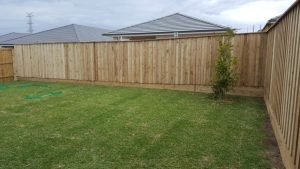
If you build your estimate from the design, count bays and structural zones appropriately, and make use of a waste allowance tied to the site conditions, your quantities will certainly hold up. That's what separates a tidy construct from a stressful one, whether you're functioning as a Colorbond fencing builder or working with a Colorbond fence contractor on site.
If you want, tell me the fencing length, article spacing, elevation, and gate dimensions, and I can go through an example take off with practical waste and footing assumptions for your specific scenario.